STINT Logo
Co-located with IEEE WiSEE 2026

STINT 2026

Space-Terrestrial Internetworking Workshop

The Forum for Delay-Tolerant and Space Networking Research

September 14–15, 2026
Leuven, Belgium

IEEE WiSEE 2026 — September 14–16, 2026

Scope & Overview

The Space-Terrestrial Internetworking Workshop (STINT) brings together researchers and practitioners working on networking challenges in space-terrestrial environments. The workshop focuses on cutting-edge research in space networking, including Delay-Tolerant Networking (DTN), Internet of Things (IoT) in space, routing protocols, and hybrid space-terrestrial architectures.

STINT provides a forum for discussing the latest advances in space-terrestrial internetworking, including protocol design, network architectures, security, and applications. The workshop encourages submissions that address both theoretical and practical aspects of networking in challenging space environments.

Topics of Interest

  • Space-terrestrial network architectures
  • Delay-Tolerant Networking (DTN)
  • Routing protocols for space networks
  • IoT in space environments
  • Security and privacy in space networks
  • Hybrid satellite-terrestrial networks
  • Network simulation and emulation
  • Applications of space-terrestrial networking

Call for Papers

We invite full original research papers (6 pages) on all aspects of space-terrestrial internetworking. All submissions will be peer-reviewed and accepted papers will be published in the IEEE WiSEE 2026 proceedings and indexed in IEEE Xplore, provided they are presented on-site.

Papers must follow the IEEE conference template (double-column, 10pt font) and should be submitted in PDF format through the IEEE WiSEE 2026 submission portal in EDAS (select the STINT track under "Workshop Tracks").

Submission Guidelines

Keynote Speakers

Edward Birrane

Edward Birrane

Johns Hopkins University APL, USA

"Great networks start with great nodes: building routers for the solar system internet"

Edward Birrane is a principal staff engineer at the Johns Hopkins University Applied Physics Laboratory (APL), specializing in delay-tolerant networking and space communication protocols. He has been instrumental in designing and standardizing the Bundle Protocol and related DTN architectures for deep space missions.

LinkedIn
Marius Feldmann

Marius Feldmann

D3TN GmbH, Germany

"Simplifying Consumption of Delay- and Disruption-tolerant Networking Capabilities"

Marius Feldmann is the CEO of D3TN GmbH, a company focused on making DTN technology accessible and deployable for real-world space and terrestrial applications. He leads efforts to bridge the gap between DTN research and operational deployment.

LinkedIn
Felix Flentge

Felix Flentge

European Space Agency (ESA)

"DTN – Standardisation & Governance: A Perspective from the European Space Agency"

Felix Flentge leads the European Space Agency's Solar System Internet (SSI) work on Disruption Tolerant Networking in international standardisation and coordination bodies such as the CCSDS, IOAG, and LunaNet. At ESA, he is responsible for various DTN-related activities covering operational deployment, product development, industrial studies, and academic research.

LinkedIn
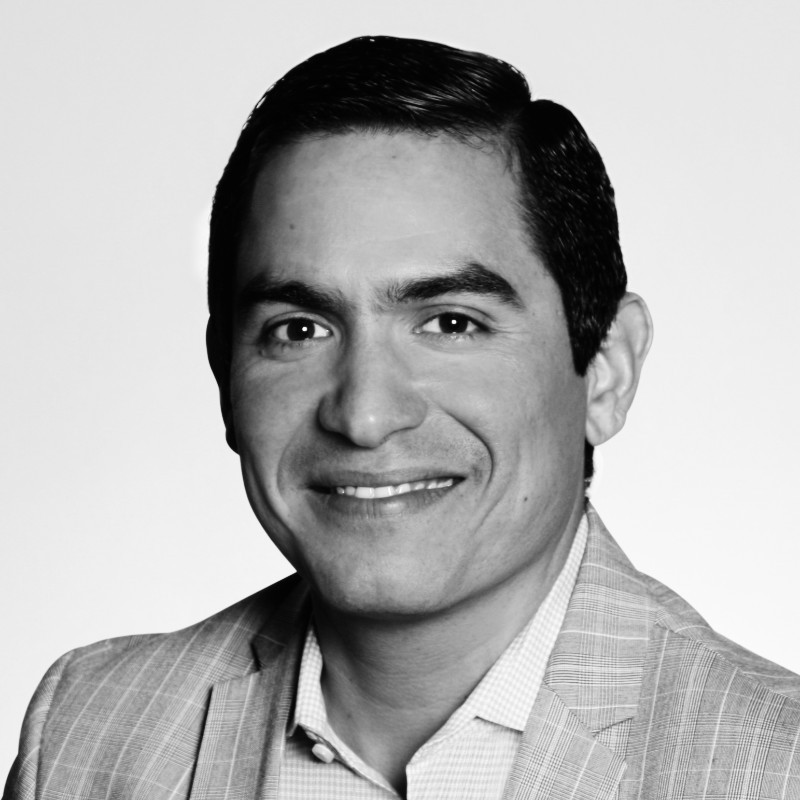
Alberto Montilla

Alberto Montilla

Spatiam Corporation, USA

"From Missions to Infrastructure: Building the Interplanetary Network."

Alberto Montilla is Co-Founder and President of the Board of Spatiam Corporation. Under his leadership Spatiam has built and validated a DTN-based space communications platform aboard the International Space Station, and has been selected by NASA to develop networking functions for lunar 5G and interplanetary quality-of-service.

LinkedIn

Program

Preliminary program

Two full days, single track. Four keynotes, invited talks, peer-reviewed papers, dedicated MISSION and D3-CONNECT sessions, a poster session, and a closing panel.

This is a tentative, preliminary program — sessions, talks, and times are subject to change.

Keynote Invited talk Paper Panel

Day 1 — Monday, September 14

09:45–11:00 Chair: Juan Fraire

Opening & Keynote I

  • OpenOpening & welcome — Organizing Committee
  • KeyEdward Birrane · JHU/APL
    "Great networks start with great nodes: building routers for the solar system internet"
  • InvMartin Tanchev · Goce Delcev University
    "Self-Authenticating Addresses for Post-Quantum DTN"
Coffee break · 11:00–11:15  |  Lunch · 12:30–13:30
11:15–12:30 Chair: Carlo Caini

Session 1 — Routing & Topology

  • PapJuan A. Fraire
    "On the Distribution of DTN Reachability Information: Push-vs-Pull"
  • PapShota Suzuki et al.
    "IR-CGR: Time-Aware Inter-Region Contact Graph Routing"
  • PapAndre Ibrahim et al.
    "Network-Layer Evaluation of Optical CPD under PAT Constraints"
13:30–14:45 Chair: Edward Birrane

Keynote II & Invited

  • KeyMarius Feldmann · D3TN
    "Simplifying Consumption of Delay- and Disruption-Tolerant Networking Capabilities"
  • InvJuan Fraire
    "Light-Time-Corrected Contact Plans: Re-Introducing Contact Plan Designer"
Coffee break · 14:45–15:00
15:00–16:15 Chair: Alberto Montilla

Session 2 — Protocols & Integration

  • PapCarlo Caini et al.
    "Integrating LoRa Nodes into Global DTN Networks (muON)"
  • PapOriol Fusté et al.
    "Deploying QUIC in Challenged Networks"
  • PapMathias Durat et al.
    "CSPCL: Non-Disruptive Transition to DTN for CubeSat Operators"
  • PstPoster Lightning Madness — 9 posters × ~1 min
Posters on display throughout — presented during all coffee breaks

Day 2 — Tuesday, September 15

09:45–11:00 Chair: Marius Feldmann

Keynotes III & IV

  • KeyFelix Flentge · ESA
    "DTN — Standardisation & Governance: A Perspective from the European Space Agency"
  • KeyAlberto Montilla · Spatiam
    "From Missions to Infrastructure: Building the Interplanetary Network"
Coffee break · 11:00–11:15  |  Lunch · 12:30–13:30
11:15–12:30 Chair: Felix Flentge

MISSION Session

  • InvMISSION project introduction
  • PapRamiro Detke et al.
    "Security-Aware Route Selection in DTNs: Key Provisioning"
  • PapSimon Rink et al.
    "CGR*: A* Search for Contact Graph Routing"
  • PapAlejandro Toledo et al.
    "Lifespan-Aware Contact Plan Design for Interplanetary FSO Networks"
13:30–14:45 Chair: Jorge Finochietto

D3-CONNECT & Modeling

  • IntroD3-CONNECT introduction — Juan Fraire
  • InvWesley Woo · Virginia Tech
    "Anyone, Anywhere, not Everyone, Everywhere: Starlink Doesn't End the Digital Divide"
  • InvTenzin Ukyab · UC Berkeley
    "Beyond the Cone Model: Quantifying the Impact of Beam-Level Constraints on LEO Satellite Networks"
  • PapKonrad Fuger et al.
    "Modeling the Performance of Priority Queueing for Space Communication"
Coffee break · 14:45–15:00
15:00–16:15 Moderator: Juan Fraire

Panel & Closing

  • PnlDTN / Internet Integration
    Ed Birrane, Scott Burleigh, Felix Flentge, Marius Feldmann, Alberto Montilla
  • EndClosing remarks

Accepted Papers

Ten peer-reviewed full papers · click a paper to expand its summary.

#33 Routing & Topology

On the Distribution of DTN Reachability Information: A Quantitative Push-Vs-Pull Analysis

Juan A. Fraire

As space networks scale from isolated point-to-point links to multi-operator, multi-hop infrastructures — spanning cislunar relays, Mars surface meshes, and deep-space probes — nodes must discover how to reach each other's Bundle Protocol endpoints. Today, this Endpoint Identifier (EID)-to-Convergence-Layer Adapter (CLA) binding is pre-provisioned; it will not scale. Two Internet paradigms offer competing solutions: proactive flooding (à la BGP) that replicates every binding everywhere, and on-demand resolution (à la DNS) that queries an authority only when needed. We build OMNeT++ models of both paradigms and evaluate them across 13 experiments on synthetic grids (up to 400 nodes, 500 EIDs) and three realistic scenarios — terrestrial disaster response, lunar Artemis, and Mars exploration — covering one-way delays from 5 ms to 12 min. The results reveal a sharp, delay-driven regime map: below ~100 ms round-trip time, DNS delivers 9–141× lower overhead with sub-200 ms query latency; above ~3 s, BGP's one-time convergence cost amortizes after a single query, making it the only viable option at Mars distances; and a contested crossover emerges at cislunar delays (~1–3 s), where a hybrid strategy may be optimal. Under EID churn, BGP maintains 100% accuracy at all rates, while DNS degrades to 30% when the churn interval falls below the cache TTL. These findings provide the first systematic, quantitative guidelines for choosing — or combining — push and pull EID resolution in networks that span the solar system.

#43 Routing & Topology

IR-CGR: Time-Aware Inter-Region Contact Graph Routing for Scalable Space DTNs

Shota Suzuki, Juan A. Fraire, Keisuke Uehara

Regionalization techniques scale Contact Graph Routing (CGR) in space Delay-Tolerant Networks by partitioning the network into routing regions, but existing local-knowledge schemes treat inter-region routing as a time-static problem: the set of viable passageways (nodes bridging two regions) is fixed at plan-derivation time. In orbital environments where passageway availability changes continuously, a statically selected passageway may have no contact left to carry a bundle onward by its arrival time, causing delivery failures. We propose IR-CGR, an Inter-Region Contact Graph Routing algorithm that constructs a time-aware Inter-Region Contact Plan (IRCP) over passageway nodes and applies contact-graph Dijkstra hierarchically at both intra- and inter-region levels, with a sampling parameter Δt that trades IRCP size against temporal resolution. Evaluations on a synthetic scaling model and the realistic Lunar Ring Road scenario show that IR-CGR sustains 100% delivery ratio, matching full-knowledge CGR, on sparse-relay lunar configurations where the static-vent baseline collapses to 53–72%; reduces per-bundle computational cost to 7–29% of the full-knowledge baseline on the largest synthetic networks at its default 3600 s sampling interval; and keeps delivery delay within about 1.9× of the full-knowledge reference on most sparse-relay configurations. A bounded delay overhead in the dense synthetic regime and a localized cost penalty under degenerate partitions together quantify the structural price of hierarchical path commitment.

#50 Routing & Topology

Network-Layer Evaluation of Optical Contact Plan Design Under PAT Constraints in Interplanetary DTNs

Andre Ibrahim, Jason Gerard, Sandra Cespedes

Interplanetary networks operate under intermittent connectivity and long propagation delays, motivating the use of delay- and disruption-tolerant networking (DTN). In optical interplanetary communication, these challenges are further exacerbated by long one-way light-time delays and micro-radian beam-pointing constraints due to narrow optical beam divergence. This requires a Pointing, Acquisition, and Tracking (PAT) control loop, which adds additional delay before data transmission can begin. In this context, deterministic DTNs rely on Contact Graph Routing (CGR), which operates on predefined contact plans whose construction depends on underlying networking assumptions and system constraints. Prior work on contact plan design (CPD) has primarily evaluated interplanetary backhaul from a scheduling perspective, focusing on metrics derived from the generated contact plans and baseline methods that respect terminal constraints. However, the impact of these contact plans at the network layer under routing protocols and traffic generation remains largely unexplored. Exploring this impact is necessary to understand whether scheduled contact plans remain effective when realistic forwarding decisions, queueing behaviour, and traffic dynamics are introduced. In this work, we evaluate CPD methods using CGR with traffic generation to capture network-level performance. Our results show that contact plan designs (CPDs) that integrate realistic pointing, acquisition, and tracking (PAT) delays improve DTN routing performance under heavy load, achieving higher delivery rates and lower end-to-end delays than CPDs focused primarily on link utilization or fairness. Although FCP reduces retargeting activity, it delivers substantially fewer bundles and incurs higher delay. These findings show that minimizing optical retargeting alone does not guarantee improved DTN performance, highlighting the need to jointly consider retargeting cost and routing efficiency in CPD.

#55 Protocols & Integration

Integrating LoRa Nodes into Global DTN Networks

Carlo Caini, Samo Grasic, Alberto Soncini

Wireless sensor networks have always been considered an appealing application of the DTN architecture, because of their intermittent connectivity. They are however often based on microcontrollers, which complicates the use of the DTN pillar, the Bundle Protocol (BP). This paper shows how it is now possible to overcome this limitation and transform generic microcontrollers with a LoRa (Long Range) interface into true DTN nodes, fully integrated in a global DTN network. At the core of the paper we have muON, a new BPv7 implementation for microcontrollers, including two convergence layers, LoRaCL and UARTCL. The former (quite powerful and innovative) is used between LoRa nodes; the latter to interconnect a LoRa node with a gateway towards the IPNSIG PWG network, an experimental DTN network with nodes on many continents. Both CLs are described in detail in the paper. Test success proves that a LoRa network can not only benefit from BP-based DTN architecture, but thanks to BP interoperability it can also become a component of a global, potentially Interplanetary, DTN network.

#66 Protocols & Integration

Deploying QUIC in Challenged Networks: Profiling and Volume-Aware Congestion Control

Oriol Fusté, Juan A. Fraire, Anna Calveras Augé, Joan Adrià Ruiz-de-Azúa

As communication networks expand into environments characterized by extreme latency and frequent disruptions, reliable data delivery requires Store&Forward (SnF) architectures. While Delay-Tolerant Networking (DTN) has traditionally served as the de facto standard for these challenged networks, there is renewed interest in leveraging the IP suite, specifically the QUIC transport protocol. However, existing literature often evaluates QUIC strictly within Interplanetary Network (IPN) contexts, mixing the fundamental constraints of general challenged networks with the specific architectural issues of a heterogeneous "network of networks". This paper isolates the generalized challenged network problem to evaluate QUIC's end-to-end transport viability. We identify that while QUIC's internal logic is inherently resilient to delay fluctuations when supported by IP-layer SnF, classic Congestion Control Algorithms (CCAs) critically fail due to unreliable signaling and extreme delays. To address this, we propose a comprehensive deployment strategy that combines rigorous QUIC parameter profiling with a novel, volume-aware CCA. This approach bounds in-flight data to a path's routable volume of data rather than relying on classic congestion signals like loss or delay increase. We validate our strategy through a ns-3 simulation of a dynamic "data mule" topology. Results show that a properly configured volume-aware QUIC/IP stack effectively utilizes available bandwidth without exceeding the nodes' storage capabilities. These findings provide initial evidence that QUIC is a viable alternative to DTN for generalized challenged networks, while delimiting the regime — single-flow, scheduled-contact scenarios with known path volumes — in which the result currently holds.

#70 Protocols & Integration

CSPCL: A Stepwise, Non-Disruptive Transition to Delay-Tolerant Networking for CubeSat Operators

Mathias Durat, Sarah Theoulle, Hugo Ponthieu, Tristan-Mihai Radulescu, Olivier De Jonckère

As Delay-Tolerant Networking (DTN) gains increasing traction in the space community, CubeSat operators may face the challenge of adopting DTN capabilities without disrupting existing software stacks built around the CubeSat Space Protocol (CSP). Rather than proposing a full architectural shift, our goal is to offer operators a gentle introduction to DTN, allowing them to experiment with its capabilities while preserving their existing infrastructure. This paper reports on our experience assembling and validating such a non-intrusive full stack in a representative CubeSat context. We evaluate interoperability with three BPA implementations: Hardy, μD3TN, and UNIBO-BP, with A-SABR contact-based routing integrated into two of them. Rather than replacing the existing CSP infrastructure, CSPCL operates as an underlayer, transmitting DTN bundles over CSP to enable DTN capabilities on top of an unmodified CSP network. For the existing applications requiring CSP-to-CSP communication across DTN boundaries, we introduce Charon, a network proxy that encapsulates IP and CAN traffic over the Bundle Protocol, allowing legacy applications to benefit from DTN features transparently. The full stack is validated on two PolarFire RISC-V boards communicating over a CAN bus, mirroring the hardware and transport layer of the Centre Spatial de l'Université de Montpellier's upcoming 12U CubeSat mission. Our results demonstrate end-to-end feasibility on representative flight hardware, and offer a concrete and accessible integration path for CubeSat operators considering a progressive adoption of DTN.

#19 MISSION Session

Security-Aware Route Selection in DTNs: Towards Optimal Key Provisioning

Ramiro Detke, Pablo Madoery, Renato Cherini, Juan A. Fraire, Jorge M. Finochietto

Bundle Protocol Security (BPSec) provides integrity and confidentiality for Delay-Tolerant Networks (DTNs) but deliberately leaves key management to the operator. In space networks, where intermittent contacts preclude interactive key exchange, the adopted security scheme — End-to-End, Hop-by-Hop, Edge-by-Edge, or Edge-to-Edge — determines which symmetric keys must be pre-provisioned for each route to remain usable. This paper introduces a security-aware route selection framework that couples routing feasibility with cryptographic provisioning: routes computed via Contact Graph Routing are translated into scheme-induced key scopes, and a mixed-integer linear program minimizes the active key scopes required to reach a target connectivity ratio. Results on a four-plane orbital scenario quantify the trade-off between key provisioning, cryptographic processing, and data-at-rest exposure: End-to-End minimizes exposure and processing at maximal key cost, Hop-by-Hop exhibits the opposite profile, while the edge-based schemes provide practical intermediate operating points, turning BPSec policy selection into a quantitative decision.

#27 MISSION Session

CGR*: A* Search for Contact Graph Routing

Simon Rink, Olivier De Jonckère, Juan A. Fraire, Holger Hermanns

Routing in space Delay-Tolerant Networks relies on Contact Graph Routing (CGR), standardized within the CCSDS Schedule-Aware Bundle Routing (SABR) framework. Existing SABR implementations use Dijkstra's algorithm, which ignores any information about the remaining cost to the destination and therefore explores many unnecessary states. We propose CGR*, an A*-based variant that exploits domain-specific heuristics to prune this search. Two heuristics are designed: h_Delay, an admissible heuristic suited to delay-dominated deep-space networks, and h_Geo, a greedy geographic heuristic for near-Earth networks, where contact availability rather than propagation delay drives arrival time. Experiments on realistic orbital scenarios show that h_Delay accelerates routing on deep-space networks by up to an order of magnitude with no loss of optimality, while h_Geo speeds up near-Earth routing at the cost of arrival times up to ~2.5× the optimum — revealing cost-model design, rather than heuristic design alone, as the open challenge for A*-based routing in near-Earth scenarios. CGR* and its heuristics are released as part of the open-source A-SABR library.

#37 MISSION Session

Lifespan-Aware Contact Plan Design for Interplanetary Free-Space Optical Networks

Alejandro Matías Toledo, Jason Gerard, Sandra Cespedes, Juan A. Fraire

Free-space optical (FSO) communication promises to relieve the capacity bottleneck in radio-frequency deep-space networks, but its narrow beams demand precise pointing, acquisition, and tracking (PAT), which in turn requires that link opportunities be scheduled in advance through contact plan design (CPD). Existing CPD schedulers for optical interplanetary backhaul maximize throughput, while battery state-of-charge has been considered only for RF networks, yet none model the irreversible decay of radioisotope thermoelectric generator (RTG) power or its effect on long-term survivability. We extend the Laser Link Scheduler (LLS) with three resource-aware variants: energy-, battery-, and lifespan-aware, that fold RTG decay and optical-terminal consumption into per-node lifetime constraints, and evaluate the trade-off between capacity, fairness, and survivability across Mars-to-Earth constellations of increasing size. We define network lifetime as the point at which data-producing source nodes can no longer transmit, and find that the capacity-greedy LLS schedules 45 to 55% more data than the fairness baseline while consuming the lowest amount of energy. However, we find that survivability is governed by the hardware power margin, not by scheduling, and stays nearly identical across all schedulers at both end-of-life and beginning-of-life RTG power levels. These distinctions matter for mission operations, where expensive scientific payloads must balance data backhaul rate against mission lifetime.

#53 D3-CONNECT & Modeling

Modeling the Performance of Priority Queueing for Space Communication

Konrad Fuger, Thomas Caffin Sune, Teresa de Jesús Algarra Uliarte, Andreas Timm-Giel

Due to the renewed interest in space exploration in recent years it is expected that the demand for communication services in space will massively increase. As the demand rises, timely and reliable communication becomes a crucial requirement for future missions. Recently traffic prioritization has been demonstrated as a mechanism to improve the quality of service for time-critical data. In this work we propose a mathematical model that describes the delay impact of traffic prioritization on space communication links. Based on a D/M/1 system with two non-preemptive priority classes that captures both retransmission delays over an unreliable channel and queueing delays we derive the full delay distribution for the high priority data. Validated against an extensive simulation campaign across a range of utilizations and priority shares, the model provides a firm lower bound on the Quasi-Realtime probability (the probability of end-to-end delay below 2.5 s), with errors below 5 % at low utilization and up to 38 % at high utilization with a high priority share. For average delay, the model matches simulation almost exactly across all tested configurations.

Posters

Nine posters on display throughout · click a poster with a chevron to expand its abstract.

Expected poster size: A1

#44 Poster

W-KAST: Predictive Optical Link-State Estimation for LEO Space-Terrestrial Networks

Qingfang Jiang, Kanglian Zhao, Jianhao Yu

Low-Earth-orbit (LEO) space-terrestrial optical networks exhibit strong temporal and spatial channel variability driven by satellite geometry and atmospheric turbulence, which complicates stable contact planning and reliable internetworking. This paper proposes W-KAST, a predictive optical link-state estimation framework for LEO space-terrestrial networks. Instead of directly modeling turbulence, W-KAST infers future slant-path Fried-parameter fields as an intermediate representation of optical link quality, enabling proactive estimation of link availability across satellite passes. The model integrates fractal wavelet kernels for multi-scale turbulence representation, Kolmogorov-Arnold Networks for nonlinear spatial mapping, and hierarchical windowed attention for spatiotemporal dependency modeling. Experiments on a calibrated seasonal dataset covering zenith angles from 0° to 80° show that W-KAST outperforms representative baselines, achieving MAEs of 0.2197 cm (0°–30°) and 0.1571 cm (0°–80°). The predicted link-state fields further support predictive contact scheduling, ground-station selection, and network resource planning in space-terrestrial systems.

#54 Poster

Stabilizing the Control Plane of LEO Satellite Constellation Routing with Area Proxy for IS-IS

Yoshiki Uchida, Keisuke Uehara, Shigeya Suzuki

Large low Earth orbit (LEO) constellations can provide space-terrestrial backbone connectivity, but their time-varying inter-satellite topology challenges conventional link-state routing. Frequent orbital link changes can expose the entire control plane, causing Link State PDU (LSP) regeneration, Link State Database (LSDB) variation, and excessive flooding. RFC 9717 mitigates this by grouping adjacent orbits into IS-IS Level 1 stripes and using RFC 9666 Area Proxy to abstract internal topology dynamics. However, it remains unclear how effectively Area Proxy suppresses control-plane churn under different orbital geometries. This paper provides an implementation-level validation of RFC 9717 routing by implementing Area Proxy in OMNeT++/ANSA and evaluating it under multiple time-varying LEO topologies. We generate orbital link events with MATLAB, import them into the simulator, and compare IS-IS behavior with and without Area Proxy in the space segment. Across stable adjacent-plane, large-RAAN-difference, and crossing-plane scenarios, the results show that Area Proxy localizes topology changes, limits external LSDB growth, and reduces control-plane sensitivity to orbital arrangement. We also discuss remaining challenges in reachability, path quality, PCE/SR-TE integration, and alternative abstraction designs.

#64 Poster

Performance Evaluation of the User Quality of Service Extension Block for Space DTNs

Teresa de Jesús Algarra Uliarte, Felix Flentge, Andreas Timm-Giel

Space networks based on Delay- and Disruption-Tolerant Networking (DTN) must support heterogeneous traffic with diverse requirements regarding latency, reliability, and storage utilization. However, existing DTN protocols provide limited support for Quality of Service (QoS) management. This paper evaluates the User Quality of Service Extension Block (UQEB), a Bundle Protocol (BP) extension that enables per-bundle QoS signalling. Using a discrete-event simulation framework and a realistic Markov-based space channel model, the proposed mechanisms for traffic prioritization, retransmission signalling, and storage management are analyzed. Results show that traffic prioritization reduces latency for time-critical data, retransmission signalling improves delivery reliability, and storage management mechanisms mitigate congestion and storage saturation. Together, these mechanisms provide flexible and effective QoS support for future DTN-based space communication networks and contribute toward the realization of the Solar System Internet (SSI).

#71 Poster

On the Design and Benchmarking of Interfacing Strategies for Delay-Tolerant Inter-Networking

Théo Tchilinguirian, Olivier De Jonckère

Conjointly with Schedule-Aware Bundle Routing (SABR), support for inter-regional routing will be a key component of future interplanetary network scalability. Dividing the network into subnetworks (regions) allows SABR to scale by reducing its scope to intra-regional routing. This work focuses on the frontier between intra- and inter-regional routing, assuming that the next-hop region has already been determined by an inter-regional routing process, and studies the mechanisms by which traffic is transferred between adjacent regions. Passageway nodes were originally introduced as nodes belonging simultaneously to the two regions they connect, while passageway contacts were later proposed to reduce the amount of operational knowledge that must be shared between regional administrators. However, a direct comparison of these approaches has been difficult because the transition from passageway nodes to passageway contacts also changes the structure and scope of the regions being interconnected. By extending the passageway-node interfacing strategy, we establish a common framework that enables meaningful comparison. We present the results of a simulated benchmark comparing the two approaches across three network sizes using three routing algorithms. This paper also describes the implementation of these passageway approaches within the A-SABR routing library.

#72 Poster

Reducing Topology Advertisements in LEO Constellations Through Ground-Station Handover Scheduling

Nicolas Rybowski, Tom Rousseaux, Maxime Piraux, Cristel Pelsser, Olivier Bonaventure

Low Earth Orbit (LEO) satellite constellations enable low-latency global Internet access but introduce continuous topological change that strains routing control planes. A primary source of churn is frequent ground-station feeder-link handovers as satellites move in and out of visibility. In this paper we show that scheduling and controlling these handovers at the ground side is a practical lever to reduce advertised topology changes, diminish transient forwarding inconsistencies, and reduce control-plane synchronization overhead across the constellation. We quantify feeder-link dynamics, introduce a handover-scheduling framework with a set of heuristics that balance usage maximisation and advertisement cost, and evaluate their effect using realistic mobility and simulation models. Our results show that modest, bounded waiting delays at handovers substantially lower the frequency of topology advertisements while preserving connectivity and utilization. We conclude that modest ground-station policies offer a path to more stable, scalable LEO routing and provide guidelines for control-plane design in future satellite Internet systems.

#74 Poster

Towards Algebro-Geometric Foundations for Temporospatial Network Modeling

Alan Hylton · NASA

Space communication networks require routing over intermittent, delayed, and dynamically changing links. Existing Delay Tolerant Networking approaches, including Contact Graph Routing, depend on schedule and topology information that becomes difficult to scale across multi-domain space networks. This paper studies an algebro-geometric model for routing structure. We represent a network graph by an affine picture variety whose points encode geometric realizations of the graph. We show that the induced Zariski topology is too coarse to distinguish routing choices, and we resolve this by constructing an explicit finite étale cover using one orientation variable per edge. The resulting oriented edge cover separates path choices by traversal direction and supports an oriented path sheaf whose sections correspond to directed routing paths. We provide Macaulay2 implementations for constructing the graph variety, the étale cover, and the induced path sheaf. This gives a computational foundation for future work on multi-domain composition and temporal space-network models.

Poster

Quantifying the Value of ISLs for Autonomous Orbit Determination in the Solar-System Internet

Alice Le Bihan, Juan A. Fraire, Andrea Nardin, Joshua Critchley-Marrows, Fabio Dovis

The Solar-System Internet (SSI) will interconnect spacecraft across the Solar System through delay-tolerant store-and-forward links. We ask a simple question with practical consequences: beyond moving data, what is such a network worth for navigation? Spacecraft that already exchange data over inter-satellite links (ISLs) can also measure range and range-rate over them and share state estimates, turning the communication fabric into a positioning fabric. We simulate a 22-node, five-body scenario (orbiters at Mercury, Venus, Earth, the Moon, and Mars) and fuse delayed ISL measurements with onboard optical navigation in a decentralized Extended Kalman Filter. Our central result is a value curve: the network-mean position error falls from about 4 km for standalone optical navigation to about 1 km as each node is allowed up to five simultaneous ISLs, with most of the gain captured by the first one or two links. We further show that the light-time delay makes exact cross-covariance tracking ill-posed, that the resulting accuracy is robust to the fusion variant, and that filter consistency remains an open issue. Because the value concentrates in a few well-chosen links under limited transceivers, orbit determination becomes a first-class objective of contact plan design.

Poster

The Open DTN of Things Platform: Architecture, Deployment, and Future Directions

Samo Grasic's student (TBD)

Abstract to be announced.

Poster

Space-Terrestrial Integrated IoT: Research and Open-Source Tools

Benoit Coeugnet, Alexander Choquenaira Florez, Juan A. Fraire

Abstract to be announced.

Important Dates

Paper submission deadline

June 15, 2026 (firm)

Acceptance notification

July 1, 2026

IEEE PDF eXpress due

August 14, 2026

Early bird registration

August 14, 2026

STINT 2026

September 14–15, 2026

Venue

KU Leuven — Leuven, Belgium

STINT 2026 will be held at KU Leuven, one of Europe's oldest and most renowned research universities, founded in 1425. Located in the historic city of Leuven, Belgium, KU Leuven is consistently ranked among the most innovative universities in Europe.

Leuven is easily accessible from Brussels Airport (BRU), approximately 30 minutes by train, and is well connected to major European cities.

KU Leuven Website

Organizing Committee

Juan A. Fraire

Juan A. Fraire

Inria-CONICET

General Chair

Scott Burleigh

Scott Burleigh

NASA JPL (Retired)

General Chair

Ed Birrane

Edward Birrane

Johns Hopkins University APL

General Chair

Marius Feldmann

Marius Feldmann

D3TN

General Chair

Carlo Caini

Carlo Caini

Bologna University

Program Co-Chair

History of STINT

STINT Icon

The Space-Terrestrial Internetworking Workshop (STINT) was established to bring together researchers and practitioners working on networking challenges in space-terrestrial environments. Since its inception, STINT has grown to become a premier forum for discussing the latest advances in space networking.

STINT has been co-located with several major conferences, including IEEE WiSEE, IEEE ICC, and IEEE Globecom. Each edition has contributed to advancing the state of the art in space-terrestrial internetworking, with papers and discussions that have influenced both research and operational systems.

Previous Editions

  • STINT 2025: Co-located with IEEE WiSEE in Halifax, NS, Canada (October)
  • STINT 2024: Co-located with IEEE SMC-IT in Mountain View, CA, USA (July)
  • STINT 2023: Co-located with IEEE WiSEE in Aveiro, Portugal (September)
  • STINT 2022: Co-located with IEEE WiSEE in Winnipeg, Manitoba, Canada – virtual – (October)
  • STINT 2021: Co-located with IEEE SMC-IT in Pasadena, CA, USA – virtual – (July)
  • STINT 2020: Co-located with IEEE WiSEE in Vicenza, Italy – virtual – (October)
  • STINT 2019: Co-located with IEEE SMC-IT in Pasadena, CA, USA (July)
  • STINT 2018: Co-located with IEEE WiSEE in Huntsville, Alabama, USA (December)
  • STINT 2017: Co-located with IEEE SMC-IT in Alcalá de Henares, Spain (September)
  • STINT 2016: Co-located with IEEE WiSEE in Aachen, Germany (September)
  • STINT 2015: Co-located with IEEE WiSEE in Orlando, Florida, USA (December)
  • STINT 2014: Co-located with IEEE SMC-IT in Laurel, Maryland, USA (September)

Sponsors

Contact Us

Get in Touch

For questions about paper submissions, registration, or general inquiries, please contact the organizing committee.

juan.fraire@inria.fr